Cross-Party Lords Committee Urges Near-Total Restrictions on Gambling Promotions Across Britain
Skriven av Zara Butler · 2026-09-17

Cross-Party Lords Committee Urges Near-Total Restrictions on Gambling Promotions Across Britain
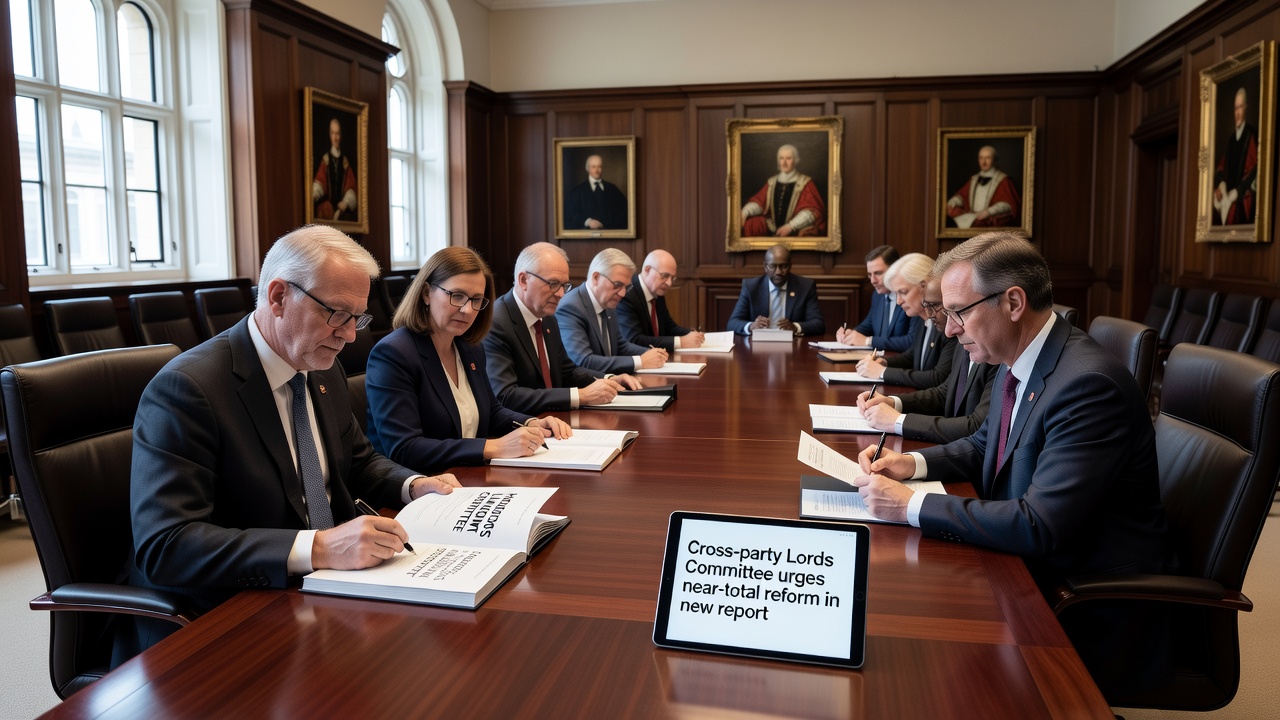
In September 2026 a cross-party House of Lords Liaison Committee released its follow-up report titled "Gambling Harm—Time for Action," which recommends a near-total ban on gambling advertising, marketing, and sponsorship throughout Great Britain, and the document identifies this approach as the most effective route toward lowering harms that affect an estimated 1 to 1.5 million adults; the committee also criticizes the government for remaining too passive while digital and influencer-driven promotions continue to expand, notes the industry's £12.6 billion revenue figure from the previous year, and acknowledges possible economic effects including sector contraction, while industry groups respond by warning that tighter rules could shift activity toward the black market.
Report Details and Scope of Proposed Measures
The Liaison Committee outlines limited exceptions that would allow continued promotion for the national lottery and racecourse events, yet it calls for sweeping controls that would cover television, online platforms, social media, and sponsorship deals across most other gambling products; according to the report these steps mirror tobacco-style restrictions that have already proved successful in other public-health domains, and the committee links the recommendations directly to evidence showing rising problem-gambling prevalence amid the growth of targeted digital campaigns.
Researchers who contributed data to the inquiry documented how influencer partnerships and algorithm-driven ads reach younger audiences more efficiently than traditional media ever could, and the document stresses that current voluntary codes have not kept pace with these developments; the committee therefore concludes that statutory limits represent the clearest path forward, while it stops short of demanding an immediate implementation timetable and instead urges ministers to consult widely before drafting legislation.
Government Response and Industry Position
Ministers have not issued a formal reply at the time of publication, although earlier statements from the Department for Culture, Media and Sport indicated openness to further evidence on advertising effects; the report itself describes the government's stance as passive, pointing out that no comprehensive review of digital marketing rules has taken place since the 2023 white paper on gambling reform.
Industry representatives, including the Betting and Gaming Council, argue that a near-total ban risks driving consumers toward unregulated offshore operators, and they cite figures showing that black-market sites already capture an estimated 5 to 10 percent of total activity; these groups maintain that existing age-verification systems and responsible-gambling tools provide adequate safeguards, yet the Lords committee counters that such measures have not reduced overall harm rates to acceptable levels.
Economic Context and Potential Consequences
The £12.6 billion revenue total reported for the prior year underscores the sector's scale, and the committee explicitly recognizes that abrupt advertising curbs could trigger job losses and reduced tax receipts; at the same time the document references international examples where similar restrictions coincided with stable or even increased tax yields once operators adapted to new promotional channels such as direct customer loyalty programs.
Those who have examined the regulatory landscape note that racecourses and the lottery would retain marketing rights under the proposed framework, thereby preserving certain revenue streams while still narrowing the overall promotional environment; the report adds that any contraction in the licensed market must be weighed against long-term savings in health and social-care costs linked to reduced problem gambling.
Next Steps Outlined by the Committee
The Liaison Committee calls on the government to publish a detailed response within six months and to consider pilot schemes that would test the effectiveness of reduced advertising exposure in specific regions; it also recommends closer coordination with the Gambling Commission to monitor black-market trends should new rules take effect, and it suggests that future parliamentary inquiries revisit the topic once initial data become available.
Observers note that the report builds on an earlier 2024 inquiry by the same committee, which already flagged advertising volume as a key driver of harm, and the 2026 follow-up strengthens those findings with updated statistics on digital marketing spend; the document stops short of endorsing a total prohibition on gambling itself, focusing instead on the visibility of promotional messages across all media.
Conclusion
The September 2026 report therefore places a clear set of statutory options before ministers, and the coming months will show whether the government chooses to adopt the committee's recommended restrictions, modify them in consultation with industry and public-health bodies, or maintain the current regulatory balance; whatever path is selected, the figures on revenue, harm prevalence, and digital-ad growth will continue to shape the debate.
The full report is available through official parliamentary channels for those seeking the complete evidence base and recommendations.